
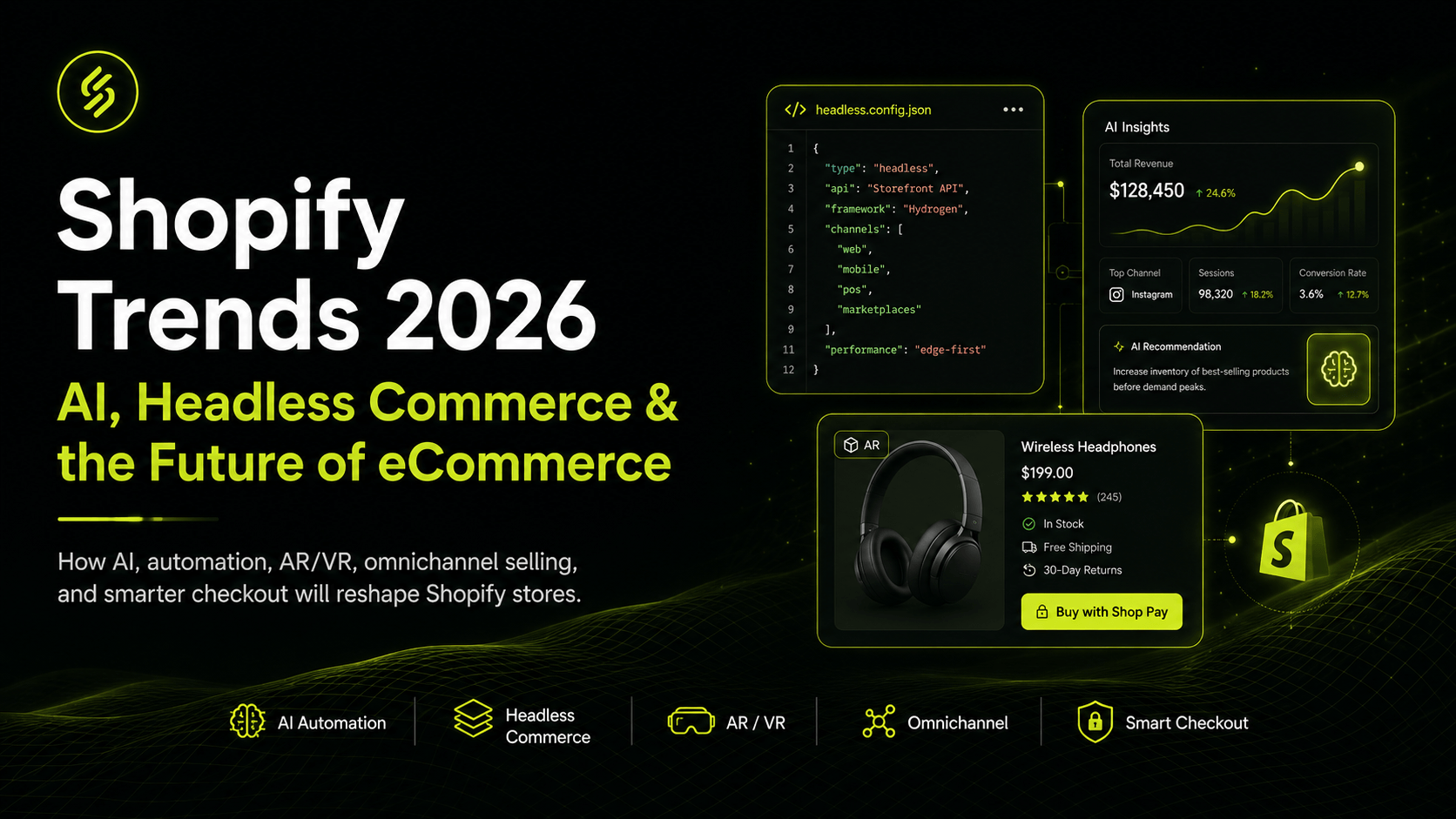

Discover the top Shopify development trends for 2026, including AI, headless commerce, AR/VR, omnichannel selling, marketplace tools, and smarter checkout experiences.
Shopify is rapidly evolving from a simple eCommerce platform into a powerful digital ecosystem where businesses of all sizes can sell, grow, automate, and scale. In 2026, Shopify is expected to experience one of its most transformative years yet. With advancements in artificial intelligence, automation, augmented reality, virtual reality, headless commerce, conversational shopping, and omnichannel selling, the way brands build and manage online stores will change significantly. For merchants, agencies, and especially Shopify development companies in the USA, these trends represent a major shift in how online stores are designed, optimized, and marketed. The future of Shopify belongs to businesses that can adopt smart technologies, deliver personalized customer experiences, and stay ahead of changing consumer expectations.
AI Will Become the Core of Every Shopify Store
In 2026, artificial intelligence will become an essential part of almost every Shopify store. Many merchants still manually manage product descriptions, marketing campaigns, customer support, and store optimization, but AI-powered Shopify tools will make these tasks faster, smarter, and more efficient.
Shopify AI will track customer behavior in real time, including what shoppers click on, how long they stay on a page, which products they revisit, and what type of content they engage with. Based on this data, stores will deliver personalized homepages, custom product recommendations, targeted discounts, and dynamic shopping experiences for each visitor.
AI will also transform content creation. Merchants will generate SEO-friendly product descriptions, category content, and ad copy from simple prompts. This will save time, reduce errors, and improve search visibility.
Customer support will also become more advanced with AI chatbots handling order tracking, FAQs, and product suggestions instantly. Businesses that ignore AI adoption will struggle to compete.
Headless Commerce Will Become the Industry Standard
Headless commerce will become a mainstream approach in 2026. By separating the frontend from the backend, developers can build faster, more flexible, and highly customized storefronts.
This approach improves performance, enhances SEO, and allows more creative freedom compared to traditional Shopify themes.
Modern frameworks like Hydrogen, Remix, Next.js, and React will power these advanced storefronts, creating app-like experiences with smooth animations and interactive layouts.
AR & VR Will Change Online Shopping
Augmented reality and virtual reality will transform how customers interact with products online.
By 2026, Shopify stores will support 3D product views, AR try-ons, and virtual showrooms.
Customers will be able to:
- See furniture in their room
- Try on accessories virtually
- Preview clothing on digital avatars
This will reduce uncertainty and increase conversion rates, especially in fashion, furniture, and beauty industries.
Shopify Will Become a Complete Business Operating System
Shopify will evolve beyond eCommerce into a full business operating system.
It will include:
- Inventory management
- Warehouse sync
- POS systems
- Order forecasting
- Financial tools
- Fraud detection
- Tax automation
As more tools become native, dependency on third-party apps will decrease.
Payments will also become faster and safer with biometric authentication and AI fraud detection.
Omnichannel Commerce Will Become Smarter
Customers now shop across TikTok, Instagram, YouTube, Amazon, and Google Shopping.
Shopify will unify all channels with:
- Automated product syncing
- Smart feeds
- Predictive analytics
AI will optimize campaigns automatically based on performance across platforms.
Social commerce will grow with live shopping and one-tap checkout experiences.
Marketplace Tools Will Unlock New Opportunities
Shopify will enhance multi-vendor marketplace features, allowing businesses to build platforms like Amazon or Etsy.
These systems will include:
- Seller dashboards
- Commission systems
- Vendor profiles
- Inventory control
- Review systems
- Automated payouts
This will help entrepreneurs build full eCommerce ecosystems instead of single stores.
Checkout Will Become Faster and Smarter
Shopify checkout will focus on speed, security, and personalization.
Future features may include:
- One-click checkout
- Crypto payments
- Biometric login
- AI fraud detection
- Personalized checkout flow
These improvements will reduce cart abandonment and increase conversions.
Conclusion
The future of Shopify in 2026 will be intelligent, automated, and highly personalized.
AI will handle most manual tasks, headless commerce will improve performance, AR/VR will enhance shopping experience, and omnichannel automation will simplify marketing.
Businesses that adopt these technologies early will lead the next generation of eCommerce.